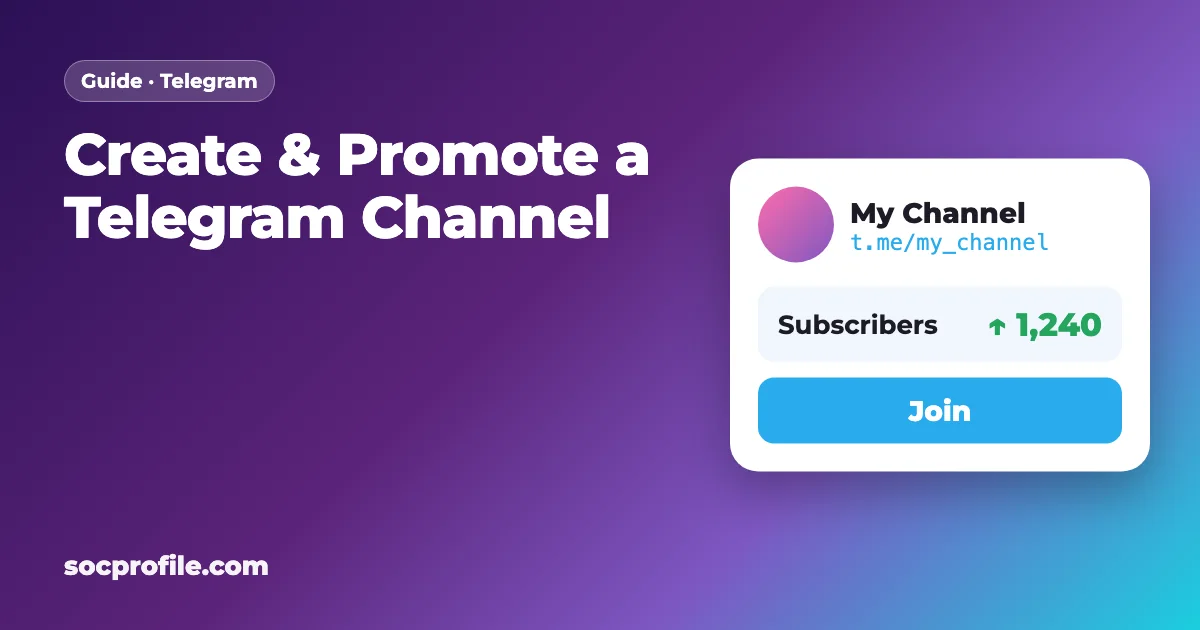
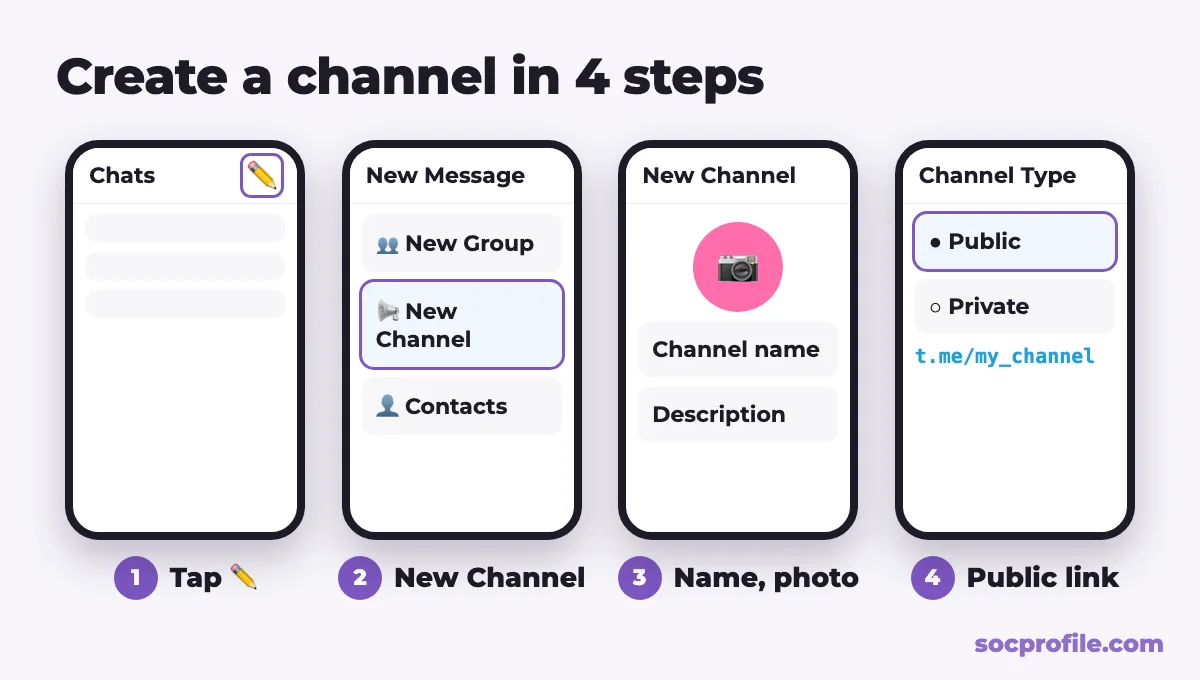
To create a Telegram channel, tap the new message icon, choose New Channel, add a name, photo and description, and pick a public link like t.me/yourname. Getting people to subscribe is the harder part. You share the link wherever your audience already is, swap shoutouts with similar channels, list the channel in directories and, once there's a budget, run Telegram Ads or buy posts in related channels. The whole process, from the first tap to the first ad, is below.
Creating the channel
A channel is a one-way feed. Only admins post; subscribers read, react, and comment if you attach a discussion group. It costs nothing and takes about two minutes to set up.
On iPhone
- Open Telegram and go to the Chats tab.
- Tap the new message icon (a pencil on a square) in the top-right corner.
- Tap New Channel, then Create Channel if Telegram shows an intro screen.
- Type the channel name, add a description if you like, and tap the camera icon to upload a photo. Tap Next.
- Choose Public or Private, set the link, then add your first subscribers from contacts or skip this step.
On Android
- Open Telegram and tap the round pencil button in the bottom-right corner.
- Tap New Channel.
- Add the name, description and photo, then tap the checkmark.
- Pick the channel type, set the link and invite subscribers.
On a computer
In Telegram Desktop, open the three-line menu in the top-left corner and choose New Channel. On macOS, click the new message icon above the chat list instead. From there it's the same sequence: name, description, photo, type and link.
Public or private?
| Public channel | Private channel | |
|---|---|---|
| Link | Short: t.me/yourname | Invite link: t.me/+Ab3dEf9x |
| Found in Telegram search | Yes | No |
| Official ad revenue sharing | Yes, from 1,000 subscribers | No |
| Best for | Growing an audience | Paid or members-only content |
If growth is the goal, go public. A separate private channel for paid content can always come later.
What to fix before anyone sees it
People decide whether to subscribe within a few seconds, so get the basics in order before you send traffic anywhere.
- The name should say what the channel is about as well as who runs it. "Remote Design Jobs by Anna" works better than "Anna's channel", and since Telegram search matches channel names, it helps to use the words people would actually type.
- Choose a username that's short, easy to spell and at least 5 characters (Latin letters, digits and underscores). Try not to change it later, because old links stop working.
- For the photo, a simple logo or a face that still reads at a tiny size in the chat list.
- In the description, one or two sentences on what you post, how often and why it's worth following, plus a contact or website link.
- Pin a welcome post that introduces the channel, links your best posts and explains how to reach you.
- In channel settings, link a discussion group so readers can comment and choose which reactions are allowed. A channel with replies and reactions feels alive.
- Turn on Direct Messages in the same settings. Readers and advertisers can then write to the channel without seeing your personal account.
Growing without a budget
Start with people who already know you
Early subscribers usually come from an audience you already have. Put your t.me link in your Instagram, TikTok, YouTube and X profiles, in your email signature, on your website and in blog posts. Then tell those followers what the channel gives them that they can't get from you elsewhere.
Most social networks allow just one link in a profile, which forces a choice between the channel and everything else. A link-in-bio page gets around that. You make a free one on SocProfile with your channel, chat, socials and website, and use that one link in every bio. For the platform details, see our guides to Instagram link in bio and adding a link to your TikTok bio.
Trade shoutouts with similar channels
Find channels in your niche with a comparable audience and suggest a swap, where each of you posts a short recommendation of the other. It's free, and the readers are already interested in the topic. Relevance matters more than size here, so pick partners whose readers would actually like your posts. Write the recommendation yourself instead of sending a generic "subscribe to this channel". And look at the partner's views per post before agreeing: a channel with lots of subscribers and few views won't send you many people.
A bigger version of the same idea is a shareable chat folder. Several channel owners put their channels into one folder, and a single invite link adds the whole set at once.
Catalogs and directories
Catalogs reach people who are actively looking for channels on a topic. Add yours to the SocProfile catalog of Telegram channels and creators, and to reputable directories in your niche, using the same clear name and description you set up earlier.
Discovery inside Telegram
Telegram itself sends readers your way in three places. A public channel with a descriptive name and username can show up when people search for those words. Telegram also recommends similar channels to people who follow related ones, and a clearly defined topic makes that more likely. Then there are forwards: every forwarded post carries your channel name, and the posts people forward most are useful, original ones like checklists, guides and templates.
Communities
Spend time in the groups, forums and Reddit communities where your readers already are. Answer questions and be helpful first, and mention the channel only where the rules allow it and it actually answers someone's question. Dropping links everywhere gets you banned and hurts your reputation.
Paid promotion
Telegram Ads
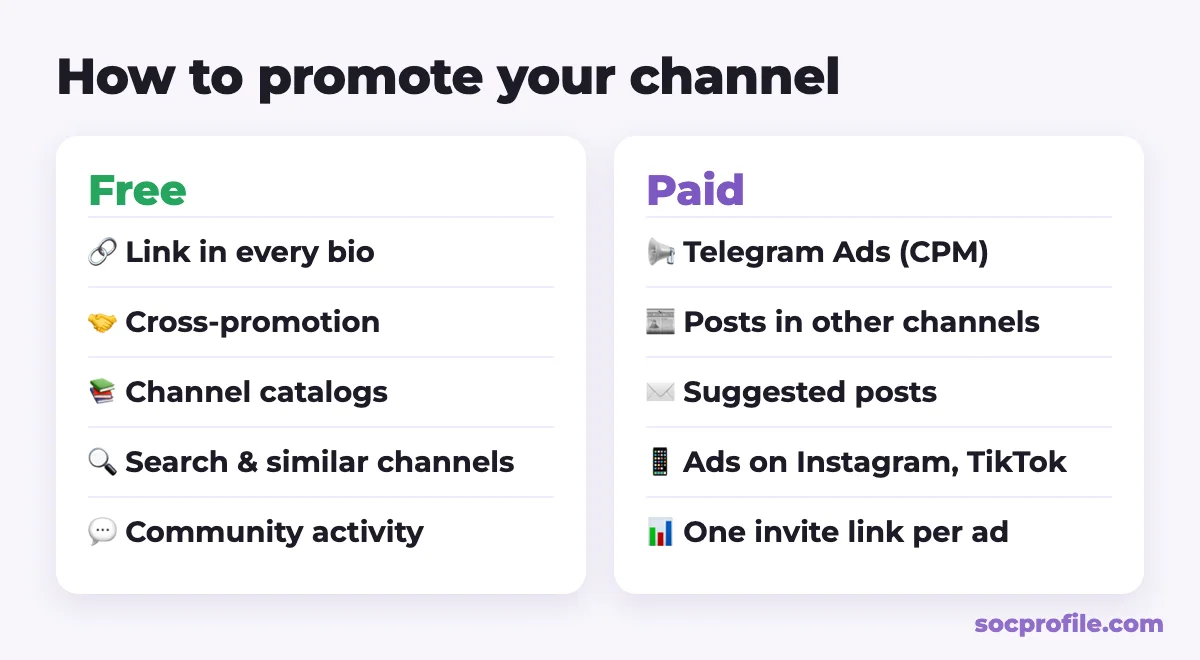
Telegram's official ad platform lives at ads.telegram.org, and its sponsored messages appear in public channels with 1,000+ subscribers. Based on Telegram's documentation and ad policies, the main terms are:
| Format | Ad text up to 160 characters plus a button. When you promote a channel, the link must lead to it in the format t.me/yourchannel. |
|---|---|
| Targeting | You choose where the ad appears, for example specific channels on your topic. The language of the target channel, the ad and your channel should match. |
| Pricing | You set a CPM (price per 1,000 views) and a budget. Ads compete in an auction and run until the budget is spent. |
| Payment | Gram (formerly Toncoin) through Fragment. If your channel earns Telegram Stars, you can spend them on ads for that channel, with each Star counted as $0.02 of ad credit. |
| Channel requirements | A profile photo, a filled-in description and at least one post in the two weeks before review. Ads are moderated and must follow Telegram's ad policies. |
We'd start small, target a handful of closely related channels and compare how many subscribers each ad brings in. Ad statistics show views and joins, so dropping what doesn't work is easy.
Buying posts in other channels
Paying another channel owner to post about you is still the most common paid method. A few habits keep it from turning into wasted money:
- Ask for recent views per post and audience geography. Sudden subscriber spikes and identical view counts on every post point to bots.
- Test a single post before you book a series.
- Create a separate invite link for each ad in your channel's invite links, so you can see exactly how many people joined through it.
- If the channel has Direct Messages on, send your ad as a suggested post and pay in Stars or Gram. The owner gets paid 24 hours after publishing, and if the post comes down sooner, the money returns to you automatically.
Ads on other platforms
Instagram, TikTok, YouTube or Google ads can also send people to the channel. They work best when the ad promises something specific, like a free guide, daily deals or job listings, and the channel delivers it from the very first post.
Keeping the people you got
Promotion only pays off if subscribers stay. Post on a schedule readers can count on, and use scheduled messages to keep it steady. Mix short text posts with images, videos, polls and stories. Don't overpost, though, because a stream of notifications is one of the usual reasons people mute or leave a channel.
Once statistics become available for your channel, check them for growth, views and your strongest posts, and make more of whatever does well. Reply in the comments, run polls, and ask readers what they want next.
When the audience is engaged, the channel can start paying for itself through ad revenue sharing, sponsored posts or paid content. Our guide on how to make money on Telegram and the Telegram Stars explainer cover the details.
Mistakes that cost subscribers
Buying fake subscribers is the worst of them. Bots don't read or share anything, they drag down your views per post, advertisers notice, and fake activity can disqualify you from Telegram's monetization programs.
Promoting an empty or half-finished channel means paying for visitors who leave right away. Changing the username after you've promoted it breaks every old link and ad. Mass-adding people or spamming groups brings reports and restrictions on your account.
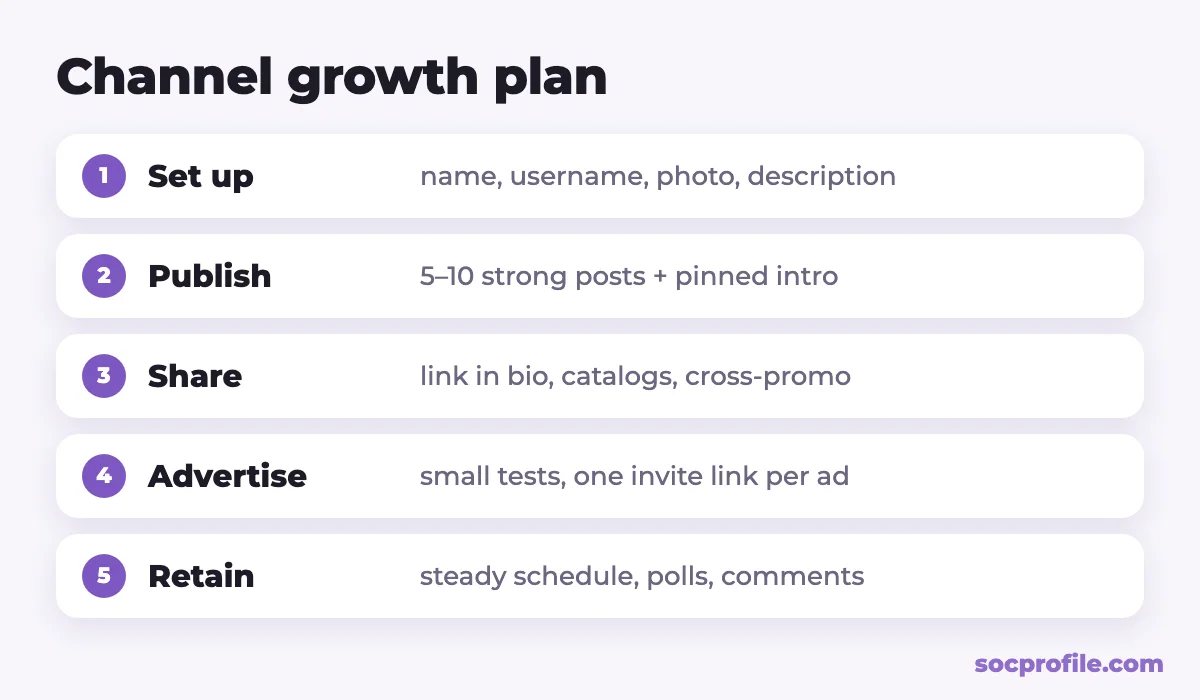
If we were launching a channel this week, we'd spend the first days on the name, description and a pinned post, write those first 5–10 posts, and only then share the link with people who already follow us. Paid ads would wait until free shoutouts show which kind of channel brings readers who stay.
Frequently asked questions
Does it cost anything to create a Telegram channel?
No. Creating and running a channel is free, with no cap on subscribers. You pay only if you decide to advertise.
How do I get my first 100 subscribers?
Publish a few strong posts, then invite people who already know you through your social profiles, website and email, and ask friends in your niche to recommend the channel. Shoutout swaps with small channels on the same topic work well at this stage too.
How much does Telegram Ads cost?
You set your own CPM and budget and pay in Gram. Actual prices depend on the auction and the channels you target, and minimum deposits change, so check your Telegram Ads account.
Will my channel show up in Telegram search?
Only if it's public. Private channels can be joined through invite links alone.
Can I see where subscribers come from?
Yes, if you create a separate invite link for each promotion. Telegram shows how many people joined through each one, and channel statistics, once your channel qualifies, show overall growth.